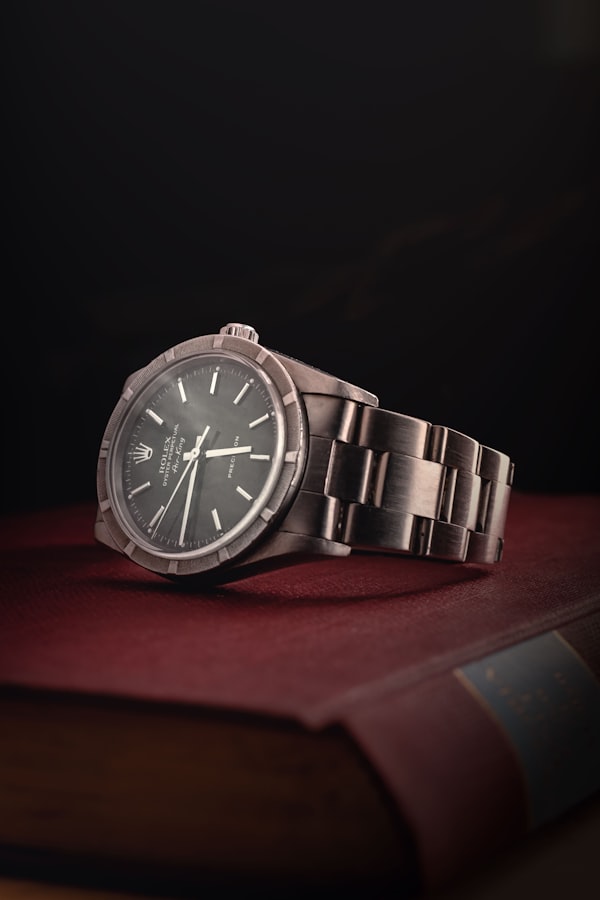
Among all watch categories, the dive watch is arguably the most popular and recognizable. Originally designed as essential tool gear for professional divers, dive watches have transitioned into classic everyday timepieces. Their appeal lies in their durability, water-tight construction, and legible dials. Building a watch that can withstand extreme underwater pressure required decades of design breakthroughs. This guide reviews the history of professional dive watches, water-sealing technology, rotating bezel locks, and luminous coordinates.
1. The Challenge of Water Resistance
Water is the ultimate enemy of mechanical watch movements. Even a tiny drop of moisture can rust steel gears and ruin dial paint. In 1926, Rolex introduced the "Oyster" case, using a screw-down crown, bezel, and caseback to create a water-tight seal. This breakthrough was proven in 1927 when swimmer Mercedes Gleitze wore the watch during a 10-hour swim across the English Channel, with the movement remaining completely dry.
"A dive watch is a survival instrument. Its design is shaped entirely by the demands of the deep: visibility, durability, and absolute water sealing."
2. The Invention of the Rotating Bezel
In the 1950s, diving became a popular hobby and military activity. Divers needed a way to track elapsed time underwater to manage their oxygen supply and decompression stops:
- The Rotating Bezel: Introduced by brands like Blancpain and Rolex, this bezel features minute markings. A diver aligns the zero marker on the bezel with the minute hand before diving.
- Uni-directional Rotation: Modern dive bezels rotate only counter-clockwise. If the bezel is bumped accidentally, it will show that the diver has been underwater longer than actual, preventing oxygen shortage.
3. Luminous Dials and legibility
Deep underwater, sunlight fades quickly. To ensure divers can read the time in pitch black conditions, dive watches feature large hands and markers painted with luminous material. Early watches used radium or tritium, while modern watches use non-radioactive Super-LumiNova paint to store light and glow brightly underwater.
4. ISO 6425 Certification
Today, professional dive watches are certified under the ISO 6425 standard. This requires timepieces to pass strict tests for water resistance (minimum 100 meters), magnetic protection, shock resistance, and strap attachment strength before they can carry the "Diver's" label.
At Classic Wrist Boutique, we appreciate the rugged engineering of classic dive watches. By choosing watches with solid water seals, uni-directional bezels, and high-visibility dials, you secure a reliable timepiece for any adventure. Explore the depths, trust the seals, and refine your wrist.